Malware Alerts
-
 Read moreAs tensions escalate in the wake of the Pahalgam attack, India’s digital frontline is now under coordinated cyber assault. The government’s Computer Emergency Response Team (CERT-In) has issued urgent advisories, calling for heightened vigilance across banks, strategic sectors, and private enterprises. The increased threat environment has prompted a nationwide effort—public and private—to fortify cyber defenses under Operation Sindoor.
 -
 Read moreIn a chilling example of cyber exploitation, threat actors are leveraging the tragic Pahalgam attack to deceive Indian government personnel into opening malicious documents. These phishing campaigns aim to install Remote Access Trojans (RATs) and extract sensitive intelligence data from highly sensitive departments.
 -
 Read moreA stealthy new cyberattack campaign is using steganography and a legacy Microsoft Office vulnerability to deliver AsyncRAT — a powerful remote access trojan capable of full system compromise. This multi-stage campaign cleverly embeds malicious code in innocent-looking image files, using advanced evasion tactics to bypass traditional security solutions.
 -
 Read moreA highly advanced Android spyware operation has surfaced, posing as the official app of the Chinese Prosecutor’s Office. Dubbed SpyMax, this malware is part of the SpyNote family and is capable of hijacking nearly every aspect of an Android device—using deceptive UI tactics and exploiting accessibility services.
 -
 Read moreData poisoning is the new and silent evolution of ransomware that doesn’t lock your files — it changes them. From financial fraud to medical disasters, this dangerous cyberattack is designed to manipulate critical data, leaving businesses, hospitals, and governments confused, vulnerable, and unprepared.
 -
 Read moreCybersecurity experts have uncovered a dangerous malware campaign where hackers mimic the Google Chrome install page to trick Android users into downloading a powerful spying tool called SpyNote. These fake pages look nearly identical to the real Google Play Store and are hosted on newly registered shady domains. When users fall for the trick and install the app, they unknowingly give hackers full control of their device.
 -
 Read moreThe infamous Vidar Stealer malware has returned with a dangerous new trick—pretending to be Microsoft’s BGInfo.exe, a tool trusted by IT professionals. This new version is designed to silently steal browser cookies, stored passwords, and crypto wallet data.
 -
 Read moreCybersecurity agencies including CISA and FBI have issued a warning about the growing use of a stealthy cyberattack technique called Fast Flux, used by hackers to hide malware servers, enable phishing websites, and build resilient command-and-control (C2) systems.
 -
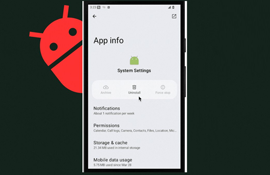 Read moreCybersecurity researchers have discovered a dangerous new Android spyware app that uses password protection and Android overlay tricks to stay hidden and prevent uninstallation. Installed by someone with physical access, this app secretly spies on the victim while making it very hard to remove.
 -
 Read moreCybersecurity researchers have discovered a new Android malware, Salvador Stealer, which is designed to steal banking credentials and one-time passwords (OTPs). This malware pretends to be a legitimate banking app, tricking users into entering sensitive financial details.
Recent Posts