Optimizely Supply Chain Attack Exposed Visitors to Card Skimming and iPhone Exploit Attempts
Posted:
November 17, 2026
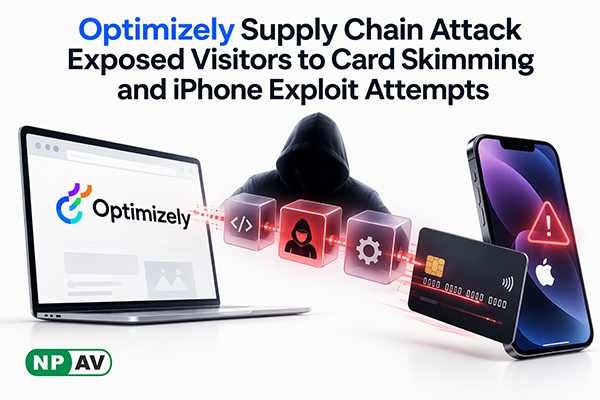
On November 16, 2026, attackers exploited a vulnerability in Optimizely Web Experimentation, a service that websites use to test page designs. They inserted malicious code into some customer scripts, which then ran when visitors opened affected pages. Because the scripts came from a trusted supplier, the incident shows how a third-party service can become a route for attacking website visitors.
Researchers found the injected code in scripts linked to at least 178 organisations, including CNN, the BBC and Zoom. It could capture card details entered into a website’s own payment form and replace cryptocurrency wallet addresses with the attacker’s address. It could not read card details entered into certain payment providers’ hosted fields. The code also attempted to deliver iOS exploit kits, but no successful iPhone or iPad takeover has been confirmed.
Optimizely said it fixed the vulnerability and removed the malicious code. Researchers have not established how many card numbers, if any, were stolen. Affected websites are not necessarily themselves breached; the code came through the shared service. The findings are a reminder that a trusted website can load harmful code through a supplier.
If you entered card details on an affected site that day, review your transactions and contact your bank if anything looks unusual. Keep your iPhone or iPad updated, and verify cryptocurrency addresses on your wallet before confirming a transfer. Businesses should review the third-party scripts running on their sites, especially on login and payment pages, and remove those they do not need.
For PC users, NPAV’s Z Security includes Zero Day Web Protection and Safe Banking features that can support safer browsing and online transactions. Keep devices and software updated as part of a broader security routine.

Comment(s)
Recent Posts