AI Phishing Attacks Steal Browser Sessions and Bypass MFA Without Malware
Posted:
July 31, 2026
Views:
55
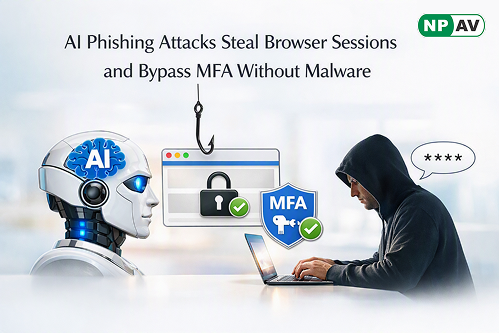
AI-powered phishing is evolving beyond traditional malware. Attackers are increasingly using adversary-in-the-middle (AiTM) techniques to steal browser sessions, capture authentication tokens, and bypass multi-factor authentication (MFA) without installing malicious files.
Modern campaigns use AI-generated emails, realistic login pages, trusted domains, and redirect chains to deceive users. Because the attack can occur entirely inside a legitimate browser session, traditional email security, endpoint protection, and file-based sandboxing may not always provide enough visibility.
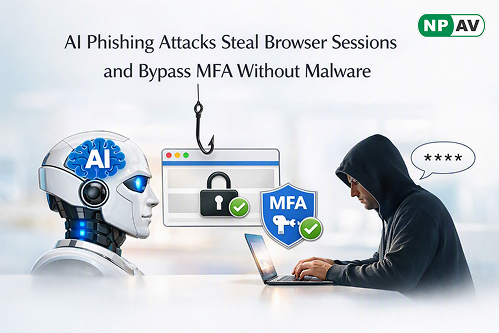
The biggest risk is session-token theft. Instead of stealing only passwords, attackers can target active authentication sessions and potentially access business applications even when MFA is enabled. This makes browser activity, session integrity, and identity protection increasingly important for enterprise security teams.
Security teams should combine browser-level threat analysis, endpoint monitoring, threat intelligence, and automated detection to identify suspicious redirects, scripts, fake login pages, and abnormal authentication behavior. Organizations should also educate employees about AI-generated phishing messages and use phishing-resistant MFA wherever possible.
NPAV Endpoint Security, endpoint protection against phishing-related threats and suspicious activity.

Comment(s)
Recent Posts