Fake Windows Lock Pop-Ups Fuel Tech Support Scams Across 20,000+ Domains
Posted:
October 19, 2026
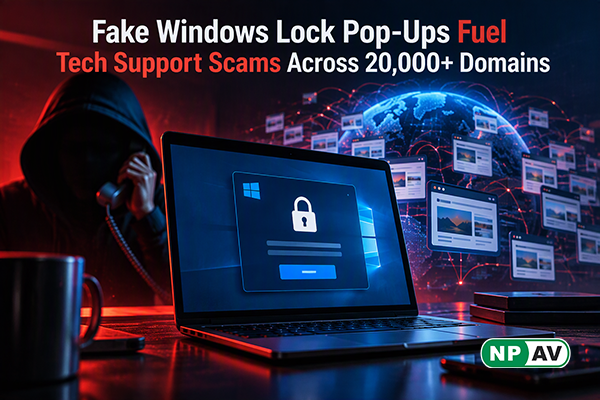
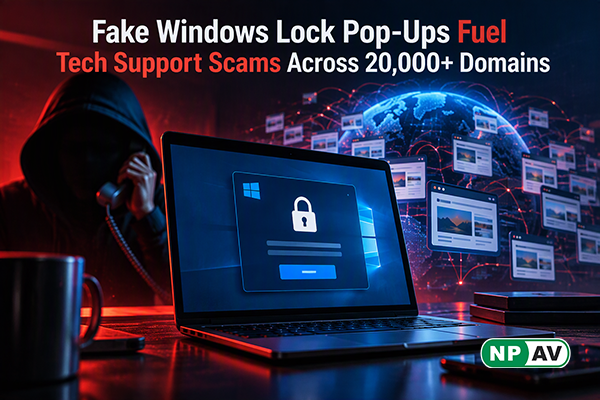
A pop-up claiming that Microsoft has locked your Windows computer can look convincing, but it may be part of a tech support scam. These warnings are designed to frighten users into calling a fake support number or installing software that gives strangers remote access to their computers. Security research published in October 2026 identified a large network distributing such scam pages through more than 20,000 domains.
The operation, known as Help TDS, reportedly uses disposable web pages hosted on Cloudflare Pages to redirect visitors to fraudulent support warnings and other unwanted content. The pages may imitate Windows updates or display messages claiming that the computer has been disabled. Victims are instructed not to restart their devices and to contact a number for assistance. Scammers may then persuade them to install legitimate remote-access tools, such as UltraViewer, which can allow another person to control the computer. Some pages also use fake CAPTCHA checks to trick visitors into enabling unwanted browser notifications.
These scams can put personal information, email accounts and financial details at risk. Small businesses face an additional concern because compromised WordPress websites may redirect visitors to fraudulent pages, potentially damaging customer trust. The report does not identify Indian victims, but the technique can target Windows users regardless of their location. Users should never call a number displayed in a suspicious security pop-up or install remote-access software at the request of an unknown caller. Instead, close the browser or end it through Task Manager if necessary. Avoid allowing suspicious browser notifications, and keep Windows, browsers and security software updated.
If you have already granted remote access, disconnect the computer from the internet, remove the unauthorised remote-access tool and change important passwords using a different, trusted device. Contact your bank immediately if financial information may have been exposed. In India, suspected cyber financial fraud can be reported through helpline 1930 or the official cybercrime.gov.in. Website owners should also review WordPress plugins, remove unfamiliar additions and secure administrator accounts. Staying calm and verifying warnings through official channels can help prevent a deceptive pop-up from becoming a serious security incident.
Security software can help reduce exposure to malicious websites, suspicious downloads and other online threats. Net Protector's npav.net is a relevant option to consider for everyday PC protection. Users should also remember that technical safeguards work best alongside safe browsing habits and caution when anyone requests remote access to a computer.

Comment(s)
Recent Posts